We love our pets. They are part of the family, curling up at our feet in the winter, greeting us at the door like we have been gone for a year, and making every day a little bit better. We share our couch, our floors, and even our pillows with them without a second thought.
There is one place pet hair and dander do not belong, though: your HVAC system.
Homes with cats, dogs, and other shedding animals need a little extra care to keep heating and cooling systems running the way they should. Fur clogs filters. Dander circulates through your vents. Left unchecked, both can quietly wear down your equipment and your air quality over time. The good news is that a handful of small adjustments, plus a little help from our technicians, can keep your HVAC system and your pet living together just fine.
Why Do Pets Affect Your HVAC System?
Pets add more airborne particles to your home than a pet-free household, and more airborne particles mean more work for your HVAC system. Fur and dander collect on filters, coils, and ductwork, which restricts airflow, forces your equipment to run longer, and can shorten its lifespan if it goes unmanaged. According to the U.S. Environmental Protection Agency, pet dander is one of the most common biological pollutants found indoors, and it circulates most easily through homes with central heating and cooling. That is exactly why a pet-friendly maintenance routine matters more than most homeowners realize.
How Often Should You Change Your Air Filter If You Have Pets?
If you have pets, plan to check your filter monthly and change it more frequently than a pet-free household would. The single most effective upgrade you can make is switching from a standard 1-inch filter to a high-efficiency 4-inch media filter.
Compared to thinner 1-inch filters, a 4-inch media filter offers better airflow, a longer lifespan, and stronger filtration, which matters a lot when pet hair, dander, and dust are part of the daily mix. Thin filters clog fast under that load, forcing your system to work harder, driving up energy bills, and letting more particles slip through into your living space.
A 4-inch media filter captures more of those particles without choking off airflow, so your system runs more efficiently and your air stays cleaner for longer. Most households only need to swap it out once or twice a year, though homes with multiple pets may need it a bit more often. The U.S. Department of Energy specifically recommends more frequent filter checks in homes with pets, since dirty filters reduce efficiency and can shorten equipment life.
Not sure if a media filter fits your setup? Our technicians can recommend the right filter, install it properly, and set you up with a change schedule built around your household.
What Is the Best Way to Improve Indoor Air Quality with Pets in the Home?
The most effective long-term solution is an in-duct air sanitizer or a GPS (Global Plasma Solutions) polarizing air cleaner, not duct cleaning. Even with regular filter changes, pet hair, dander, and other particles can still work their way through your HVAC system and back into the air you breathe.
We do not offer duct cleaning because it is a short-term fix at best. Instead, we recommend installing a system that actively neutralizes airborne contaminants every time your HVAC runs. An in-duct air sanitizer or GPS polarizing air cleaner reduces odors, cuts down on circulating dander, and improves overall air quality around the clock, which makes a real difference for allergy sufferers and homes with heavy shedders.
Want cleaner air without the hassle of duct cleaning? Our technicians can walk you through the best air purification option for your home and handle installation from start to finish.
How Do You Get Rid of Pet Odors in Your HVAC System?
Pet odors get trapped in your filters, ductwork, and coils, then recirculate through your vents every time the system runs. This is especially noticeable in the summer, when your AC is working overtime and extra moisture in the system gives odors more to cling to.
Here is what actually helps:
- Install a REME Halo LED to continuously purify the air moving through your system.
- Keep pets bathed and groomed on a regular schedule.
- Vacuum frequently, especially around vents and air intakes.
- Have our technicians perform seasonal tune-ups to clean coils and check for spots where odor tends to get trapped.
How Do You Protect Your Outdoor AC Unit from Pets?
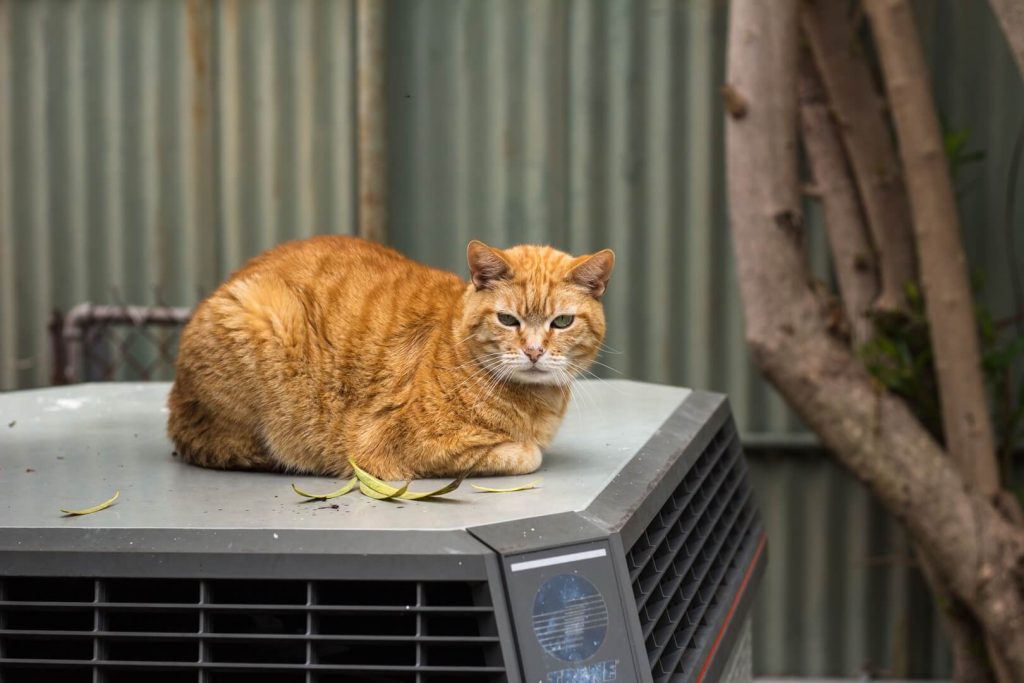
Keep pets away from your outdoor condenser unit and maintain a barrier with at least two to three feet of clearance on all sides. If you have a dog with free roam of the yard, that clearance matters for more than just curiosity. Urine is surprisingly corrosive and can seriously damage the coils and fins of your condenser over time. Pet fur can also get pulled into the unit and restrict airflow, which forces the system to work harder than it should.
A small fence or barrier around the unit solves most of this, as long as it still allows proper ventilation. If you suspect your outdoor unit has already taken a hit, have our technicians take a look. They can inspect for damage and clean it out safely before a small problem turns into an expensive one.
How Often Should Pet Owners Schedule HVAC Maintenance?
Pet owners should schedule professional HVAC maintenance at least twice a year, rather than the standard once-a-year check. More airborne particles mean more strain on your system, and pet-heavy homes tend to see shortened equipment lifespans when that extra load goes unaddressed.
Twice-a-year visits give our technicians the chance to inspect everything from airflow to coil cleanliness, catching small issues before they become expensive repairs. It also means your system is not silently struggling under a layer of pet hair that you cannot see from the thermostat.
Frequently Asked Questions
Does pet hair really damage an HVAC system?
Yes. Pet hair clogs filters, coats coils, and restricts airflow, which forces your system to run longer and harder. Over time, that added strain can shorten the life of your equipment and raise your energy bills.
Can pet dander make indoor air quality worse?
Yes. Pet dander is a common airborne allergen that circulates through central heating and cooling systems, and it can affect anyone in the home who is sensitive to allergens, not just the pet owner.
Do I need duct cleaning if I have pets?
Not necessarily. We do not offer duct cleaning because it is a short-term fix. An in-duct air sanitizer or GPS polarizing air cleaner provides a more effective, longer-lasting solution for pet-related air quality issues.
How do I stop my house from smelling like pets through the vents?
Install a REME Halo LED, groom pets regularly, vacuum around vents often, and schedule seasonal tune-ups so our technicians can clean coils and clear out trapped odor sources.
Keep the Fur, Ditch the HVAC Stress
Your pets are not going anywhere, and we would not want them to. That does not mean your HVAC system has to suffer for it. With a few small adjustments and regular visits from our technicians, you can keep your home comfortable, your air clean, and your system running well for years to come. That is what Comfort You Can Count On looks like for a house full of pet hair.
Need help getting started? Whether it is filter advice, air quality upgrades, or a routine tune-up, Air Comfort of KY has you covered, furballs included. Contact our technicians today to schedule your pet-friendly HVAC tune-up.